Cristóbal Valenzuela’s AI-Driven Vision for Hollywood Sparks Debate
Cristóbal Valenzuela, co-founder and CEO of Runway — the AI-powered video generation startup now valued at more than $5 billion — has likely failed to win over anti-AI creative professionals with his latest remarks about artificial intelligence’s future role in Hollywood.
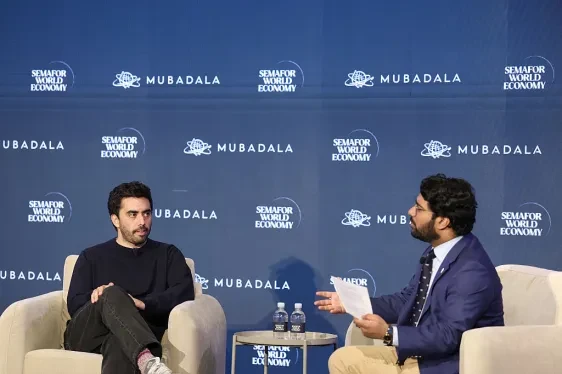
Speaking at this week’s Semafor World Economy summit, the AI industry leader proposed a full overhaul of major studio budgeting. Instead of sinking $100 million into a single feature film, he argued, studios should allocate that same budget to produce 50 separate projects, expanding overall output and boosting their odds of scoring a blockbuster hit.
“If you’re spending $100 million to make one 90-minute feature, imagine putting that same $100 million into roughly 50 separate movies,” Valenzuela said. “You get the same visual quality, the same total volume of on-screen runtime, but you end up with far more content. That means you have a much better chance of landing a successful hit. At the end of the day, it’s a quantity problem.”
This framing directly contradicts the long-held industry belief that every film represents a studio’s investment in a unique work of art, and that Hollywood succeeds when it backs the right creative vision and team. Valenzuela’s AI-driven model boils the entire film business down to a numbers game: produce enough content, and success will eventually follow.
During the interview, Valenzuela acknowledged that integrating AI into creative sectors like film and television has sparked significant controversy, but argued that “things are changing fast.” He noted that much of the early skepticism around AI stemmed from fear and misunderstanding, and that most industry workers now understand the full capabilities of these powerful tools.
He explained that Runway is building advanced AI world models designed to help creative professionals “do more work, better and faster.” The startup already partners with hundreds of studios and independent creators, and Valenzuela claimed the technology is already driving down production costs across the board.
This industry shift is already underway. A high-profile example is the upcoming $70 million feature Bitcoin: Killing Satoshi, which is set to be the first studio-quality AI-produced feature film to hit the market. According to TheWrap, AI integration cut the film’s production costs from an original projected estimate of $300 million. Amazon has also adopted AI to reduce film and TV production expenses, joining a growing list of players that includes major Indian studios. Sony Pictures has announced plans to integrate the technology into its workflow, and even iconic filmmaker James Cameron has publicly backed AI as a tool that can keep big-budget blockbusters in production without triggering workforce layoffs.
Meet your next investor or portfolio startup at Disrupt
Your next funding round. Your next key hire. Your next game-changing opportunity. Find it all at TechCrunch Disrupt 2026, where 10,000+ founders, investors, and tech leaders gather for three days of 250+ tactical sessions, high-impact introductions, and market-defining innovation. Register now to save up to $410.
Meet your next investor or portfolio startup at Disrupt
Your next funding round. Your next key hire. Your next game-changing opportunity. Find it all at TechCrunch Disrupt 2026, where 10,000+ founders, investors, and tech leaders gather for three days of 250+ tactical sessions, high-impact introductions, and market-defining innovation. Register now to save up to $410.
When asked which segments of production are already seeing cost reductions from AI, Valenzuela replied: “It’s everywhere. It’s on the pre-production side, it’s in scripting, it’s in planning, it’s in execution, it’s in visual effects — this technology is already beginning to be deployed at scale.”
While AI makes it far easier to produce higher volumes of content, critics push back on the tech industry’s core assumption that scaling creativity through AI will automatically result in more high-quality original art. Runway, however, remains committed to this belief.
“There’s a creativity crisis in the industry right now, driven by the economic incentives that shape how content is made,” Valenzuela said. He drew a comparison to book publishing, claiming that roughly 25 million new books are released globally every year — far more than any single person could ever read.
“Of course I don’t read 25 million books a year… but the world is a far better place because more people get the chance to tell their story or share a message with the world,” he explained.
For context, Valenzuela’s figure does not match official industry data: UNESCO estimates that only 2.2 million new published book titles are released globally each year. That said, he is likely counting self-published e-books and user-generated stories on platforms like Wattpad, most of which are excluded from traditional publishing estimates — and many of which are now created with AI tools.
Regardless of the exact number, Valenzuela’s core argument is clear: the film industry should flood the market with low-cost AI-enabled content, even if only a small fraction of projects become breakout hits. That is the future he hopes AI will bring to Hollywood.
“We have an internal saying at Runway: the best movies are still yet to be made,” Valenzuela said. “That’s because we haven’t gotten to hear from billions of people around the world who have never had access to this kind of technology before.”
Cristóbal Valenzuela’s AI-Driven Vision for Hollywood Sparks Debate