Two U.S. Citizens Convicted in North Korean Fraud Scheme Sentenced to Prison
Two United States citizens have received prison sentences of seven and a half years and nine years respectively, after being convicted of participating in a conspiracy that helped the North Korean government place unvetted remote IT workers at American companies.
The U.S. Department of Justice (DOJ) publicly announced the sentences for Kejia Wang and Zhenxing Wang, both New Jersey residents, in a Wednesday press release. Prosecutors allege the pair built and maintained the operational backbone for the fraudulent scheme, most notably running and managing so-called “laptop farms” inside U.S. borders. These setups let North Korean workers connect remotely to U.S.-based machines, masking their actual location to make it appear they were living and working legally in the country.
Per DOJ records, the fraud generated roughly $5 million in revenue for North Korea. The conspiracy also involved co-conspirators stealing the identities of more than 80 U.S. citizens to secure positions at over 100 U.S. corporations, multiple of which rank on the Fortune 500 list. Beyond earning regular salaries from these roles for North Korean IT staff, the scheme also granted unauthorized foreign actors access to sensitive company information, including trade secrets and proprietary source code in multiple cases, according to department officials.
“This deception put North Korean IT workers on the payroll of unsuspecting U.S. companies and granted them access to U.S. corporate computer networks, posing a direct threat to our national security,” stated John A. Eisenberg, Assistant Attorney General for National Security at the DOJ, in the official announcement.
Prosecutors outline that between 2021 and 2024, Kejia Wang worked alongside other co-conspirators to oversee the operation of laptop farms made up of hundreds of personal computers, while Zhenxing Wang hosted a portion of these devices at his private residence. The pair also set up shell companies with linked financial accounts to receive salary payments owed to the fake IT workers, funneling millions of dollars in proceeds that were later transferred overseas out of the U.S. “Kejia Wang, Zhenxing Wang, and four other U.S.-based facilitators earned a combined total of nearly $700,000 for their individual roles in the conspiracy,” the DOJ’s announcement noted.
In one specific documented case, the fraudulent North Korean IT workers successfully stole export-controlled data from an unnamed artificial intelligence company headquartered in California.
U.S. officials have also issued a public notice offering rewards of up to $5 million for any information that helps disrupt similar ongoing conspiracies, including details on nine additional individuals alleged to have worked with Kejia Wang and Zhenxing Wang.
Meet your next investor or portfolio startup at Disrupt
Whether you’re closing your next funding round, hiring your next key team member, or chasing your next breakout opportunity, you’ll find it at TechCrunch Disrupt 2026. More than 10,000 founders, investors, and top tech leaders gather for three days of over 250 tactical industry sessions, high-impact professional introductions, and market-defining innovation. Register now to save up to $410 on your admission pass.
Meet your next investor or portfolio startup at Disrupt
Whether you’re closing your next funding round, hiring your next key team member, or chasing your next breakout opportunity, you’ll find it at TechCrunch Disrupt 2026. More than 10,000 founders, investors, and top tech leaders gather for three days of over 250 tactical industry sessions, high-impact professional introductions, and market-defining innovation. Register now to save up to $410 on your admission pass.
This sentencing marks the most recent legal action taken against North Korea’s broad, far-reaching network of fraud schemes that have helped fraudulent North Korean IT workers gain employment at hundreds of companies across the U.S. and the West. Alongside large-scale cryptocurrency thefts that netted North Korea more than $2 billion just last year, the North Korean government relies on this type of employment fraud to generate revenue for its regime and weapons development programs. Heavy international sanctions have cut the country off from most of the global economy, making these illicit income streams critical to its operations.
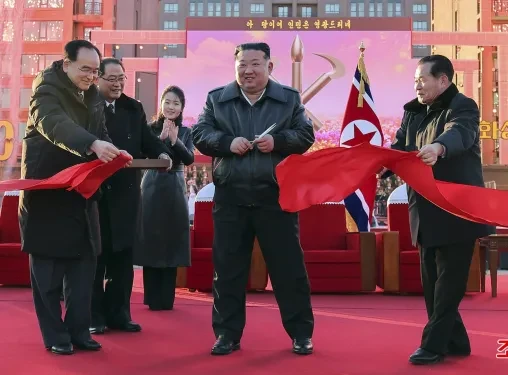
To combat this ongoing threat, many U.S. companies and recruiters have developed unconventional screening tactics, including asking applicants suspected of being fraudulent North Korean workers to make critical comments about North Korean leader Kim Jong-Un — an act that is illegal for anyone residing inside North Korea. The strategy went viral recently after a recording of a job interview circulated online, showing an applicant fumbling for a response after interviewers asked him to say “Kim Jong Un is a fat ugly pig,” before he ultimately hung up the call abruptly.
Two U.S. Citizens Convicted in North Korean Fraud Scheme Sentenced to Prison