Canva Unveils Agentic Canva AI 2.0, Targeting End-to-End Creative Workflows
A core value proposition of modern AI platforms is straightforward: you describe your task to an AI assistant, the tool handles task planning and pulls in the right tools to execute the work, and it remembers your unique preferences to deliver better results over time. This capability is especially transformative for creative and design professionals, who have long sought a predictable, automated workflow for building content and custom media assets.
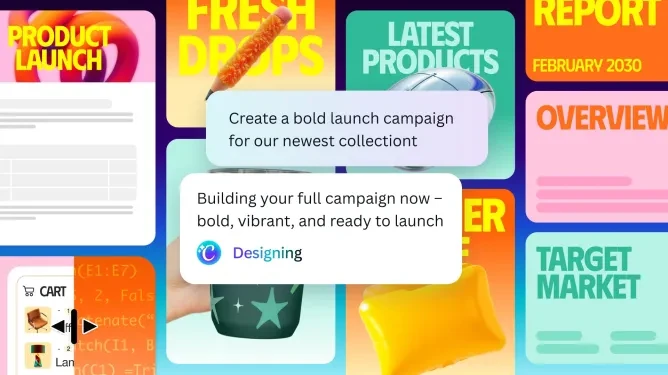
Canva is leaning hard into this agentic AI paradigm with the latest iteration of its native Canva AI assistant. Powered by the company’s custom AI models, the updated tool lets users turn plain-text prompts into fully editable, customizable designs. After a user outlines what they want to build, the assistant automatically activates the required Canva tools and generates multiple initial design options. All outputs are structured in editable layers, giving users full flexibility to tweak any part of the final design to match their vision.
This rollout is part of Canva’s broader strategic push to make its AI assistant the central hub of all user workflows, alongside adding high-demand new capabilities like AI-powered image and website generation.
Canva’s top competitors are moving toward the same agentic AI goal. This week, Adobe launched a new Firefly AI assistant that can leverage functionality across Adobe’s full suite of creative apps to complete end-to-end tasks. Just last month, Figma added native support for AI agents to its platform via a new Model Context Protocol (MCP) server.
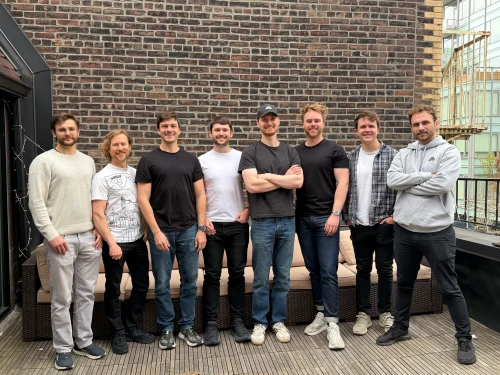
Cliff Obrecht, Canva co-founder and COO, notes that while many companies are working to consolidate creative workflows, most businesses still prefer to handle the final editing and publishing steps directly on Canva’s platform.
“I think a lot of small businesses start and end their entire workflow completely inside Canva,” Obrecht said. “We also work incredibly well with Anthropic, Google, and OpenAI, so if someone is building their agentic workflows in those products, they can call Canva to generate content, then pull that content back into those LLMs. But they always need to finish with the final mile of editing, collaboration, and deployment. That’s where we really are strong.”
While the majority of Canva’s revenue comes from individual users and small teams, Obrecht shared that the company’s enterprise segment is seeing exceptional growth, hitting 100% year-over-year expansion. He also confirmed that Canva, which most recently holds a $42 billion valuation according to PitchBook data, is on track to go public as early as next year.
Find Your Next Big Break at TechCrunch Disrupt 2026
Hunting for your next investor, your next portfolio startup, your next funding round, key hire, or game-changing opportunity? Connect with what you’re looking for at TechCrunch Disrupt 2026, where 10,000+ founders, investors, and tech leaders gather for three days of 250+ tactical sessions, high-impact introductions, and market-defining innovation. Register now to save up to $410 on your pass.
Alongside the core AI assistant upgrade, Canva has added new native integrations with widely used work tools including Slack, Gmail, Google Drive, Google Calendar, and Zoom. Users can opt in to let the AI assistant build richer context by accessing their emails, team conversations, stored files, and meeting notes. The company has also added a new web research capability, allowing the AI assistant to browse the public internet to complete tasks on a user’s behalf.
The update also introduces automated task scheduling, so users can instruct the AI to run repeatable tasks automatically in the background. All outputs from scheduled tasks are saved as drafts for user review and approval before publishing, keeping creators in full control of final work.
Canva has also refined its existing lineup of AI tools with this release. Its AI code generator now supports HTML imports, and users can now use text prompts to generate fully custom spreadsheets tailored to their needs.
The company has also delivered major efficiency gains to its underlying AI models: Canva reports that its Lucid Origin image-generation model is now 5x faster and 30x cheaper to run, while its 12V image-to-video model is 7x faster and 17x cheaper than previous versions.
Canva AI 2.0 launches in research preview this week, with a full rollout to all Canva users planned over the coming weeks.
Canva Unveils Agentic Canva AI 2.0, Targeting End-to-End Creative Workflows