Ex-Neuralink Co-Founder’s Startup Taps Top Yale Neuroscientist to Lead First U.S. Human Trials of Biohybrid BCI
Science Corporation, the biotech startup launched by Max Hodak, former president and co-founder of Neuralink, has brought on a leading neurobiologist to lead the first U.S. human clinical trials of its groundbreaking biohybrid brain-computer interface (BCI).
Dr. Murat Günel, chair of the Department of Neurosurgery at Yale School of Medicine, has joined the company as a scientific advisor after two years of ongoing discussions. His core goal for the first stage of work is to surgically place the company’s initial sensor — part of an eventual interface that will merge lab-grown neurons with electronic hardware — into a human patient’s brain.
Founded in 2021, Science closed a $230 million Series C funding round last month that pushed the company’s valuation to $1.5 billion. Its farthest-along product to date is PRIMA, an implant designed to restore vision for people living with blindness caused by macular degeneration and related retinal conditions. Science acquired the PRIMA technology in 2024, has already advanced it through early-stage clinical trials, and plans to roll it out more broadly across Europe once it secures regulatory approval, a milestone that could come as early as this year.
For Hodak, however, the company was built around a far bigger long-term vision: developing dependable, long-lasting communication links between computers and the human brain. The technology would both treat neurological disease and open the door to human augmentation, including adding entirely new sensory capabilities to the human body. This goal has shaped Hodak’s entire career: from convincing a graduate neuroscience lab to accept him as an undergraduate student, to launching his first biotech computing startup, to co-founding and building Neuralink alongside Elon Musk.
Neuralink and other BCI developers have already scored key wins, using electronic sensors to pick up brain activity in patients with ALS, spinal cord injuries, and other conditions that block the brain’s ability to communicate with the body. Patients with implanted devices can already control computers or generate text on a screen just by thinking about the action. Even so, the path to a viable mass market for these devices remains unclear, bogged down by strict regulatory barriers and a relatively small pool of eligible patients for existing use cases.
Hodak long ago concluded that the conventional approach to interfacing with the brain — using metal probes and electrodes to interact with neural tissue via electricity — is a dead end. While the technology can produce impressive short-term results, Günel explains these rigid probes cause permanent brain damage that almost always degrades device performance over time. This key limitation pushed Science’s founding team to pursue a far more organic, bio-integrated approach.
“The idea of using natural connections through neurons and creating a biological interface between the electronics and the human brain is genius,” Günel told TechCrunch.
Meet your next investor or portfolio startup at Disrupt
Your next funding round. Your next key hire. Your next game-changing opportunity. Find it all at TechCrunch Disrupt 2026, where 10,000+ founders, investors, and tech leaders gather for three days of 250+ tactical sessions, high-impact introductions, and market-defining innovation. Register now to save up to $410.
Meet your next investor or portfolio startup at Disrupt
Your next funding round. Your next key hire. Your next game-changing opportunity. Find it all at TechCrunch Disrupt 2026, where 10,000+ founders, investors, and tech leaders gather for three days of 250+ tactical sessions, high-impact introductions, and market-defining innovation. Register now to save up to $410.
Alan Mardinly, Science co-founder and chief science officer, leads a team of 30 researchers developing the company’s biohybrid sensor. The finished device will be embedded with lab-grown neurons, which can be stimulated with light pulses and are engineered to naturally integrate with a patient’s existing brain neurons, forming a seamless bridge between biological tissue and electronic hardware. In 2024, the company published a working paper demonstrating that the device could be safely implanted in mice and used to successfully stimulate brain activity.
Right now, the company’s core internal priorities are building functional device prototypes and refining processes to grow neuron cells that meet strict clinical medical standards for a range of therapeutic uses.
Günel will advise the team as it prepares for human trials, and he has already begun discussions with the medical ethics review boards that oversee human subjects research. The very first step of the trial will test the company’s advanced base sensor (without the embedded lab-grown neurons) inside a living human brain.
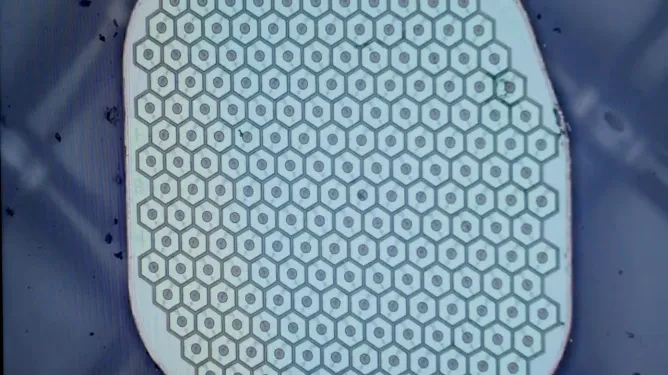
Unlike Neuralink’s device, which is inserted directly into brain tissue, Science’s sensor is implanted inside the skull but sits on top of the brain’s surface. The company argues that this design difference, combined with the device’s tiny size — it packs 520 recording electrodes into an area no bigger than a pea — means it poses no meaningful risk to patients, so it does not plan to seek full FDA approval for these early exploratory trials.
The team plans to recruit trial candidates who are already scheduled for major invasive brain surgery, such as stroke patients who need part of their skull removed to reduce dangerous swelling from brain edema. In these cases, Günel will place the sensor on top of the patient’s cerebral cortex, then evaluate its safety and how effectively it can record natural brain activity.
Günel notes that the device could address a wide range of neurological conditions if it proves safe and effective. An early potential use is delivering mild electrical stimulation to damaged brain or spinal cord cells to support natural healing. A more immediate, lower-complexity application could be continuous neurological activity monitoring for brain tumor patients, sending early alerts to caregivers before an oncoming seizure.
If the device reaches its full potential, however, Günel believes it could deliver far more effective treatments for progressive conditions like Parkinson’s disease, which gradually robs patients of control over their movement. Current treatment options include experimental brain cell transplants and electrical deep brain stimulation, but neither approach has been shown to reliably stop the disease from progressing over time.
“I imagine this biohybrid system as combining those two — you have the electronics, and you have the biological system,” he told TechCrunch. “In Parkinson’s, for example, we cannot stop the progression of the disease; in neurosurgery, all we are doing is putting an electrode to stop the tremors. Whereas if you can really put the [transplanted] cells back in the brain, protect those circuits, there’s a chance, and I believe it’s a good chance, that we can stop progression of the disease.”
Still, major work remains before trials can get off the ground. Günel says expecting trials to launch by 2027 is already an optimistic timeline.
Ex-Neuralink Co-Founder’s Startup Taps Top Yale Neuroscientist to Lead First U.S. Human Trials of Biohybrid BCI