Waymo Launches Public Autonomous Vehicle Testing in London Ahead of 2026 Commercial Robotaxi Launch
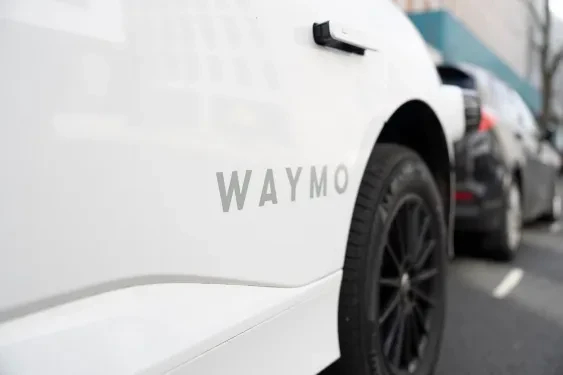
Alphabet’s self-driving technology subsidiary Waymo has officially kicked off testing of its autonomous vehicles on London’s public roads, as the company works toward launching a commercial robotaxi service in the UK capital this year.
The Alphabet-owned firm has spent months laying the groundwork for this milestone. Waymo first announced its plan to begin operating on London’s public roads back in October. Before launching autonomous trials, the company had its employees manually drive vehicles across the city to build custom, detailed mapping data of local roads. Right now, a fleet of roughly 100 all-electric Jaguar I-Pace vehicles fitted with Waymo’s proprietary self-driving system are active in the city, with a trained human safety operator behind the wheel of each car. Per Waymo’s official announcement, testing is currently underway across a 100-square-mile zone of London.
Before Waymo can launch fully driverless commercial operations, the UK government must first finalize official regulations for its autonomous vehicle trial program. Waymo notes it is working closely with regulators to make its upcoming service accessible to as many Londoners as possible.
“Core driving AI [is] generalizing very well,” Waymo co-CEO Dmitri Dolgov wrote in a LinkedIn post announcing the start of testing. “Autonomous testing now underway with specialists behind the wheel as we master local nuances and validate performance on UK roads — a key step toward rider-only deployment.”
In a separate LinkedIn update, Waymo shared that it is making long-term investments in the UK, including hiring local talent and building multiple autonomous vehicle (AV) service hubs across London. The company also confirmed it is partnering with local emergency services as it builds a foundation to expand its business across the wider European market.
If Waymo follows its standard market launch strategy, the company will next roll out fully driverless testing, then open the service to its own employees for trials before allowing members of the general public to book robotaxi rides. Waymo’s 2026 commercial launch target remains dependent on the UK government completing its approval process for fully driverless commercial operations.
Waymo already has longstanding ties to the UK: Back in 2019, the company acquired Latent Logic, a UK startup spun out of the University of Oxford’s computer science department. The firm used a machine learning technique called imitation learning to make self-driving car simulation more accurate, and the acquisition led Waymo to launch a permanent engineering hub in Oxford.
Meet your next investor or portfolio startup at Disrupt
Your next funding round. Your next key hire. Your next breakout opportunity. Find it all at TechCrunch Disrupt 2026, where 10,000+ founders, investors, and tech leaders gather for three days of 250+ tactical sessions, high-impact introductions, and market-defining innovation. Register now to save up to $410 on your pass.
Meet your next investor or portfolio startup at Disrupt
Your next funding round. Your next key hire. Your next breakout opportunity. Find it all at TechCrunch Disrupt 2026, where 10,000+ founders, investors, and tech leaders gather for three days of 250+ tactical sessions, high-impact introductions, and market-defining innovation. Register now to save up to $410 on your pass.
Waymo previously told TechCrunch it operates a global fleet of more than 3,000 robotaxis, a figure supported by regulatory documents filed with the U.S. National Highway Traffic Safety Administration in January. The total fleet size may have already grown following the addition of new minivan-style vehicles built for Waymo by automaker Zeekr.
Waymo’s commercial robotaxi service is already live across 11 U.S. cities, including major markets such as Atlanta, Austin, Los Angeles, Phoenix, and the San Francisco Bay Area. The company is also running pre-launch testing and preparation work in several other new markets globally.
If successful, London will become Waymo’s first fully commercial international autonomous ride-hailing market (the company is also running testing in Tokyo). Waymo will face stiff competition in both new markets: UK-based AV startup Wayve and global ride-hailing giant Uber are also developing a fully driverless robotaxi service for London. In March, Wayve, Uber, and Nissan announced a partnership to launch a driverless robotaxi pilot in Tokyo by the end of 2026.
Updated: This article was updated at 2 pm PT to add details on the size of Waymo’s London testing fleet and its operating area.
Waymo Launches Public Autonomous Vehicle Testing in London Ahead of 2026 Commercial Robotaxi Launch